At this year’s Constructive Conference in Auckland, we had the privilege of engaging directly with builders to better understand how they use specifications and construction documentation—such as NECO2, our newly released New Zealand carbon repository. It was a valuable opportunity to listen and learn from those working at the practical end of the construction sector.
We asked every delegate we spoke with: “What can we do to improve construction documentation and specifications for builders?” A recurring theme emerged—variability in the quality of specifications provided by designers. Builders were particularly concerned about residential specifications, where they often encountered documents with little to no project-specific customisation. The result? “Cookie cutter” or “copy and paste” specifications that offer limited value on site.
Builders consistently told us that the most useful specifications are those tailored to the project at hand. Generic, system-wide documents filled with irrelevant options and overly broad content—such as listing every system option instead of filtering to the selected one—create confusion, slow down progress, and increase the risk of misinterpretation. Specifications are not written for consenting officers—they’re for constructors, who must interpret and act on them daily.
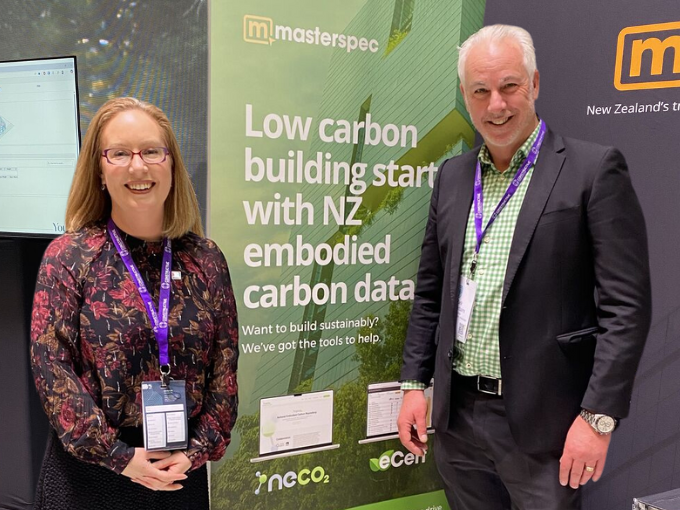 📸 Photo: Claire Falck of BRANZ with Mark Fairbairn CIL Masterspec at the recent Master Builders 2025 Constructive Conference, Auckland.
Builders want clarity:
- Work sections that match the actual materials and methods being used.
- Unnecessary options removed.
- Practical instructions that reflect real-world site conditions.
- Emphasis on what matters, so critical details aren’t buried in noise.
We acknowledge that editing a specification takes time and effort—and only the designer, familiar with the project conditions and design intent, can do it. While it’s tempting to copy unaltered content from similar projects or just leave everything in “just in case,” these approaches creates noise and confusion. In today’s environment, where time and fees are tight for you and the project, investing in a well-honed, project-specific specification can save cost, reduce errors, and accelerate project delivery. The message from builders was clear: Give me what I need, highlight what matters, and make it easy to find.
At CIL Masterspec, we also have taken some learns and are currently exploring ways to improve how specifications are delivered and consumed—without removing content, but presenting it in more builder-friendly formats. This could include:
- Greater emphasis on product selections and installation instructions.
- Tools to highlight unusual options or conditions.
- Mobile-friendly formats for phones and tablets.
In the meantime, here are a couple of features already available in our platform:
- MasterKey: Use it to hyperlink drawings directly to specification clauses, allowing builders to jump from PDF drawings to detailed specs with one click—fast and accurate.
- Cloud Issue: Issue the specification online so builders can access it anytime, anywhere. (see on export function below)
- Part Four Summary: Print selections as a supplementary document to help builders quickly understand what’s new and what needs closer attention. (see on export function below)
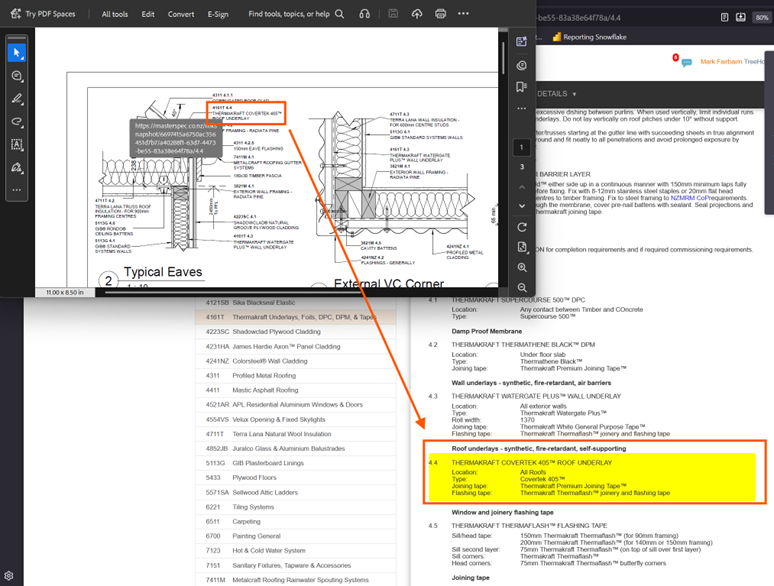 Screenshot of MasterKey used it to hyperlink drawings directly to specification clauses.
This feedback isn’t about questioning or calling out the professional skills of designers—we all know the value of well-crafted construction documentation. But what I heard repeatedly from builders is a call for us to take that extra step when writing specifications: to allow time, and make space in our fee, to ensure specifications are tailored to the specific project, site, and construction systems.
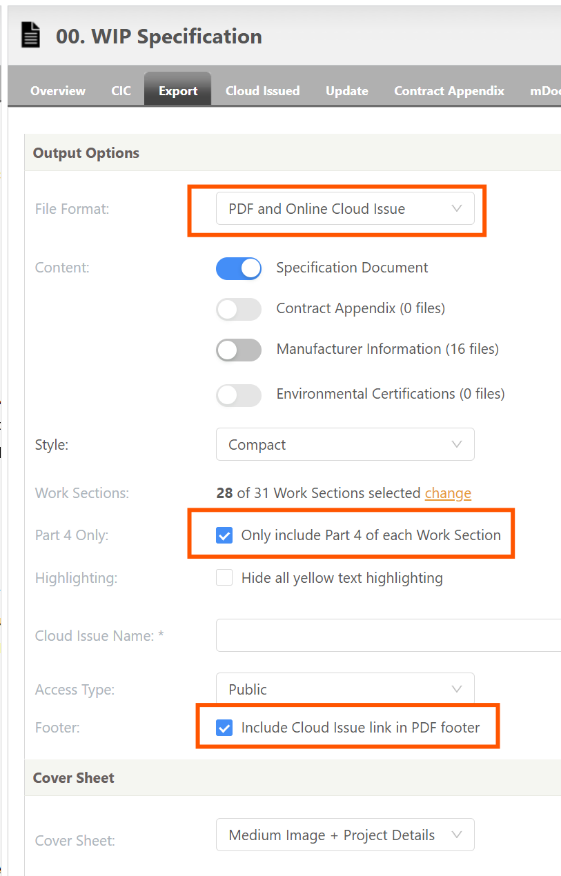
Screenshot of specification export function
Doing so can save time, reduce risk, and improve outcomes for everyone involved. It’s a small but conscious investment with a big return—and yes, it might even help you sleep better knowing the documentation is working for the client, project and builder, not against them. By aligning our specifications more closely with the needs of those who build from them, we strengthen the entire project chain. And at CIL has long been committed to supporting better outcomes through collaboration, and we will continue to evolve our tools, templates, and delivery formats to improve and meet the needs of both specifiers and constructors.