For combustion to take place four elements must be present - fuel, heat, oxygen and a chemical chain reaction. Removal of one of these elements will result in the fire being extinguished. Fire Classes have been developed to describe particular types of fire, and extinguisher types have been developed to deal with a particular fire class.
FIRE CLASSIFICATION
This is specified in AS/NZS 1850:2009 Portable Fire Extinguishers - Classification, Rating And Performance Testing, and defines the Class (type) of fire as follows:
| CLASS |
DESCRIPTION |
| Class A |
Fires involving carbonaceous solids (paper, wood, and many plastics) |
| Class B |
Fires involving flammable and combustible liquids |
| Class C |
Fires involving combustible gases |
| Class D |
Fires involving combustible metals (e.g. lithium, sodium, magnesium) |
| Class E |
Fires involving energized electrical equipment |
| Class F |
Fires involving cooking oil and fat |
EXTINGUISHER TYPES
Each of these Classes has a coloured symbol to NZS 4503:2005, Hand Operated Fire-Fighting Equipment (or AS/NZS 1841.1, slightly different), see below.
There are 5 main (with some variables) extinguisher types these are:
- Water
- Foam
- Dry powder (ABE Dry Powder, BE Dry Powder and Specialist Powder)
- Carbon dioxide (CO2)
- Wet Chemical
Each of these extinguisher types has to have a designated colour band specified in AS/NZS 1841.1:2007, Portable Fire Extinguishers - General Requirements, refer to table below.
Each extinguisher will also have the required fire class symbol for what it should be used for and also the prohibited fire class symbol it would be dangerous to use with (see below).
Extinguishers must be regularly inspected/maintained.
EXTINGUISHER SELECTION
Sources for this table are NZS 4503 and NBS (UK). Most are fairly standard, however chemical makeup of extinguishant may vary performance slightly, check with manufacturer.
| Table Key: |
● = most effective to NZS 4503 (Also to NBS) |
| |
● = effective to NZS 4503 (Also to NBS) |
| |
● = effective only to NZS 4503 (not used by NBS) |
| |
● = effective only to NBS (not covered by NZS 4503) |
| |
X = Dangerous if used in this situation |
| |
Water |
Foam |
ABE Dry Powder |
BE Dry Powder |
Special Powder Metals |
Carbon Dioxide |
Wet Chemical |
| Class A |
● |
● |
● |
|
|
|
● |
| Class B |
X |
|
● |
● |
|
● |
|
| Class C |
|
|
● |
● |
|
|
|
| Class D |
|
|
|
|
● |
|
|
| Class E |
X |
X |
|
|
|
● |
X |
| Class F |
X |
|
|
|
|
|
● |
| Band Colour |
Red |
Blue |
White |
White |
Lime Green |
Black |
Oatmeal |
Table notes: Carbon Dioxide extinguishers not suitable for outdoors use. Class F fires, extinguisher best accompanied with a fire blanket. Powder extinguisher capabilities vary select carefully. Specialist advice should usually be sought for combustible metals.
WARNING HALON EXTINGUISHERS
Halon fire extinguishers were banned in 1998 due to greenhouse gases and ozone depletion risks. Although most have been recovered, the Fire Protection Association NZ (FPANZ) report that there is still potentially a large number out there (not maintained?). Halon extinguishers can be identified because they are yellow (not red), and should be handed in to the FPANZ for safe disposal.
CLASS SYMBOLS INDICATING SAFE TO USE EXTINGUISHER
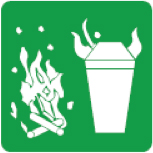 |
 |
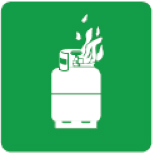 |
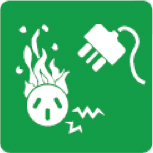 |
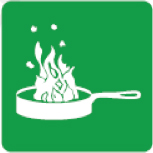 |
| CLASS A |
CLASS B |
CLASS C |
CLASS E |
CLASS F |
CLASS SYMBOLS INDICATING DANGEROUS/PROHIBITED TO USE EXTINGUISHER
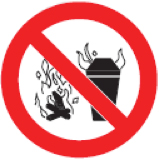 |
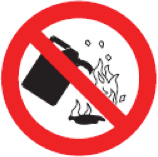 |
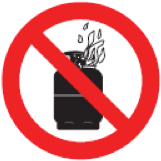 |
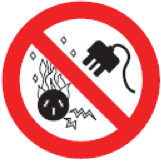 |
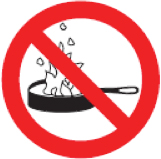 |
| CLASS A |
CLASS B |
CLASS C |
CLASS E |
CLASS F |
MASTERSPEC
To specify use the Masterspec section 7381 PORTABLE FIRE EXTINGUISHERS & FIRE BLANKETS (in Standard, Services, Interiors, Structural & Civil).
LINKS
 |
Halon
Fire Protection Association NZ - Halon |
|
NBS
Sustainable Earth, sustainable us |